
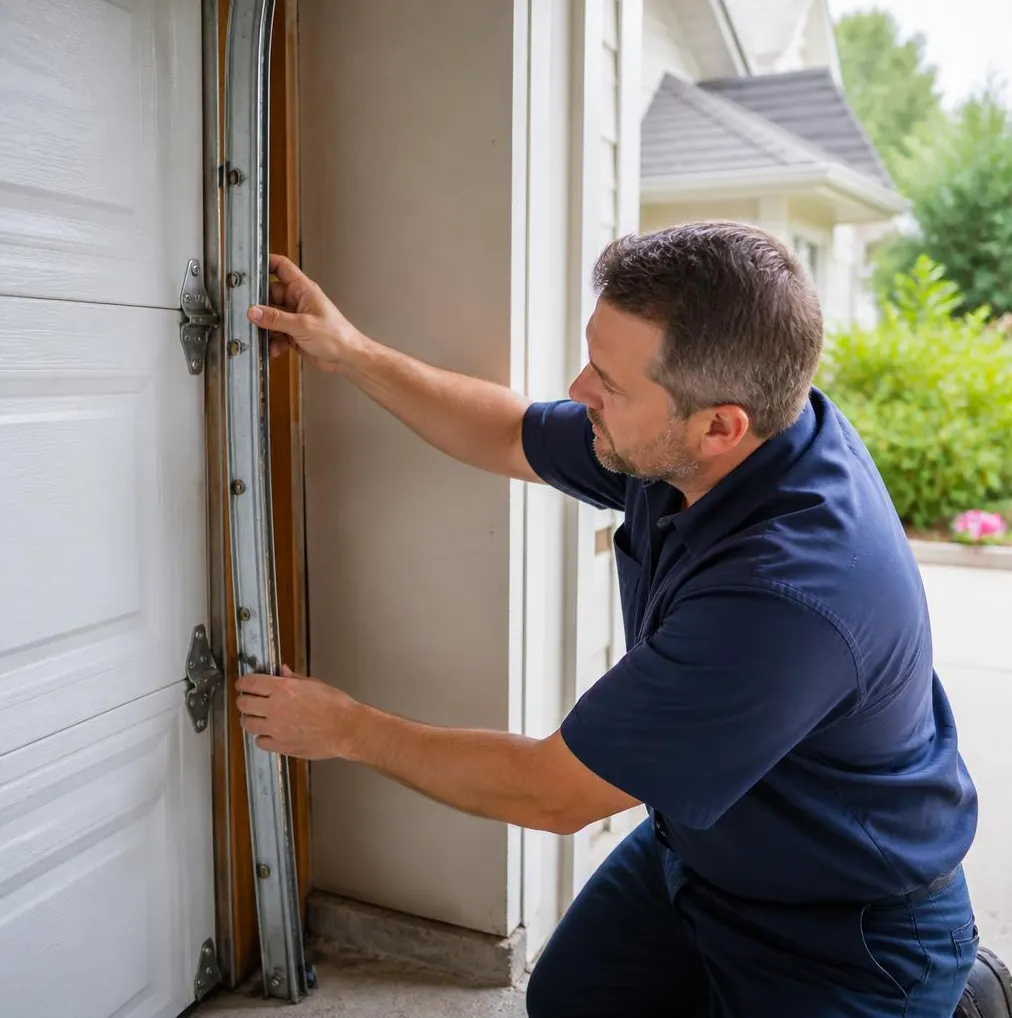
The Moment You Notice It
It usually happens at night. One of you pulls in, hits the remote, and the door stops three inches from the floor, lets out a groan, and reverses all the way back up. Or it's the opposite: the door comes down hard enough to bounce, or it clips a storage bin and keeps going instead of stopping. Someone says "it's fine, just adjust the force." Someone else says "that sounds like a bad idea." You're both half right, and this is the explainer to settle it.
What Force and Travel Limits Actually Are
Every garage door opener has two separate settings that control how it behaves, and they're easy to confuse:
- Travel limits tell the opener exactly how far to move the door — where "fully closed" is and where "fully open" is. Get this wrong and the door stops short, reverses early, or tries to keep pulling after it's already closed.
- Force settings tell the opener how much resistance to push through before it decides something is blocking the door and should stop or reverse. This is the safety feature that keeps the door from crushing a car bumper, a pet, or a kid who darts underneath.
They work together. If the travel limit is set wrong, the door may be fighting to close past where it should actually stop, which makes it feel like it needs more force to get there. Turning up the force doesn't fix the real problem — it just lets the opener shove harder against whatever is wrong.
Symptoms That Point to a Travel Limit Problem
- Door reverses a few inches before touching the floor, every time, in the same spot
- Door doesn't fully open, leaving a gap at the bottom
- Opener keeps running (motor noise) for a second or two after the door looks fully closed
Symptoms That Point to a Force Problem
- Door closes hard enough to bounce or shake the frame
- Door doesn't reverse when it touches something light, like a broom leaned against the opening
- Opener strains or makes a labored grinding noise through the whole cycle, not just at the end
Why This Argument Happens More Often Out Here
In the East Valley desert heat, garage door hardware takes a beating that a lot of manufacturers never designed for. Lubricant on the rollers, hinges, and opener rail dries out faster in extreme dry heat, so the door develops more friction than it had when it was installed. The opener's force setting was tuned for a smoothly moving door — once friction creeps up, the opener has to work harder to push the door the same distance, and it starts to feel like a force problem even though it's really a maintenance problem.
Cool desert nights add another wrinkle: metal tracks and panels contract slightly overnight and expand again once the sun hits the garage door in the afternoon. A door that closes fine at 6 a.m. can bind slightly by 3 p.m. if the track has shifted even a little out of alignment. Monsoon dust works into rollers and track the same way grit works into any moving part — it adds resistance, and resistance gets misread as a force problem.
None of this means the force setting is the right thing to crank up. It means the actual cause is usually dirt, dried lubricant, or minor misalignment, and the force knob is just hiding the symptom.
Why Cranking the Force Is the Riskier Choice
The spouse worried about turning up the force has the better instinct. The auto-reverse force setting exists specifically so the door stops before it crushes something — a bumper, a bike, a pet, or worse. Set it too high to compensate for a dragging door, and you've quietly disabled the safety margin that setting was there to provide. The door may still look like it's working fine, right up until it doesn't stop for something it should have stopped for.
What to Check Before Touching Any Settings
- Look at the tracks for visible dirt, dust buildup, or a bent section — wipe them down and see if the problem changes
- Check that rollers and hinges have lubrication; dry, squeaky hardware needs a garage-door-specific lubricant, not household oil, which attracts more dust in a monsoon-dusty garage
- Watch exactly where the door stops or reverses — the same spot every time points to a limit setting, not force
- Test the auto-reverse safety feature by laying a 2x4 flat on the floor where the door closes — a properly set door should reverse immediately on contact
If the door still misbehaves after cleaning and lubricating the hardware, the limits and force likely do need a real adjustment — but that's a process of small changes and retesting, not one big turn of a dial to make the noise stop.
When to Call Gold Canyon Garage Door
If you've cleaned the track, lubricated the moving parts, and the door still reverses early, slams, or doesn't respond to the 2x4 test, it's time to call. Our Opener Repair & Replacement service includes properly resetting travel limits and force settings to the opener's actual specifications, not just dialing until the symptom disappears. If the real cause turns out to be a worn spring or misaligned track rather than the opener itself, we'll catch that during the visit — our Maintenance & Tune-Ups service checks the whole system, not just the settings, so you're not back here arguing about the same door in three months.
If your garage door in Gold Canyon, AZ is reversing, slamming, or just not acting right, call Gold Canyon Garage Door and we'll get the settings — and the door — back where they belong.